

Autonomous Testing with AI and NLP: The Future of Software Quality Assurance in 2026
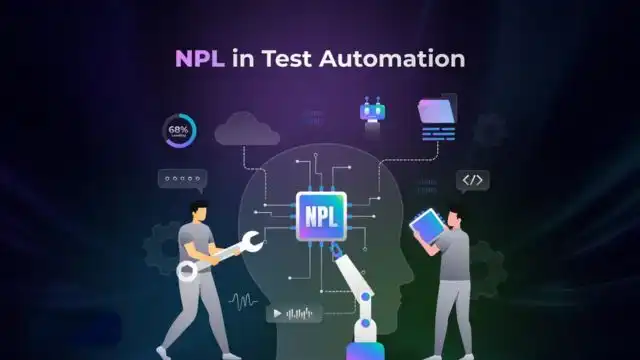
Software quality assurance has entered a new age of automation. In 2026, the marriage of Artificial Intelligence (AI) and Natural Language Processing (NLP) is driving a shift toward autonomous testing—systems capable of understanding, generating, and executing test cases with minimal human oversight.
Modern testing teams no longer script every interaction manually. Instead, AI models interpret user behavior, system logs, and API flows to craft intelligent, adaptable test suites that evolve alongside applications themselves.
What Is Autonomous Testing?
Autonomous testing refers to quality assurance workflows where AI systems independently generate, prioritize, maintain, and execute test cases across environments. These self-managing frameworks utilize machine learning, NLP, and predictive analytics to ensure continuous software reliability.
The goal: eliminate repetitive manual tasks and build intelligent test ecosystems that learn from each release cycle.
How NLP Powers Intelligent Testing
NLP enables machines to interpret natural-language inputs—like user stories, requirements, and bug reports—to design test scenarios automatically. This is particularly impactful in agile workflows, where documentation evolves rapidly and human testers struggle to keep up.
Examples of NLP-Driven Testing
- Requirement Parsing: AI converts human-written acceptance criteria into executable test scripts.
- Defect Root Cause Mapping: NLP models classify bug descriptions for automatic triaging and prioritization.
- ChatOps Integration: Testers can request AI-driven test summaries through voice or text assistants.
Core Capabilities of AI-Based Test Automation
- ✔ Self-Healing Scripts: Automatically updates locators or dependencies after UI or API changes.
- ✔ Predictive Test Selection: Runs only high-impact test cases based on historical defect data.
- ✔ Automated Test Data Generation: Synthesizes diverse datasets using generative models.
- ✔ Defect Prediction: Identifies potential bugs before execution through code pattern recognition.
- ✔ Continuous Learning: Learns from every release and test outcome to enhance coverage.
Traditional vs. Autonomous QA Approach
| Feature | Traditional Testing | AI-Powered Testing |
|---|---|---|
| Test Creation | Manual scripting by QA teams | Auto-generated via NLP and ML models |
| Maintenance | Rework required after UI/logic changes | Self-healing with minimal manual updates |
| Execution Speed | Subject to time and resource constraints | Parallelized, adaptive, and continuous |
| Coverage | Static test libraries | Dynamic, AI-optimized based on change impact |
Technologies Fueling Autonomous Testing
- Machine Learning Models: Identify usage anomalies and probable breakpoints.
- Generative AI: Creates synthetic test data mirroring real-world inputs.
- Computer Vision: Recognizes visual elements for UI testing and regression analysis.
- Natural Language APIs: Allow test case generation from JIRA, Confluence, or direct user input.
Popular Tools in 2026
Leading autonomous testing platforms now integrate AI copilots directly into CI/CD workflows. Some noteworthy solutions include:
- ✔ Testim AI Pro – Low-code, self-healing test automation with NLP integration.
- ✔ mabl Intelligence Suite – Predictive test analytics and CI-aware healing algorithms.
- ✔ AutonomIQ Fusion – NLP-driven acceptance testing and requirement parsing.
- ✔ Functionize Vision – Visual AI for UI and cross-browser test optimization.
Business Advantages of Autonomous Testing
- 60% Faster Regression Testing through AI prioritization.
- Reduced Maintenance Costs as self-healing reduces script upkeep.
- Continuous Delivery Alignment with DevOps and CI/CD pipelines.
- Enhanced Accuracy through predictive defect detection and natural-language validation.
Challenges and Ethical Considerations
Despite its promise, AI-driven testing introduces new challenges:
- Data privacy across training datasets and test logs.
- Bias in NLP interpretations leading to false test assumptions.
- Overreliance on automation reducing human analytical checks.
The key lies in human oversight—AI augments testers, but responsibility for quality remains human-centered.
The Future of QA: Self-Learning Test Systems
By 2027, we expect AI to deliver fully autonomous QA cycles. These systems will self-generate test plans, analyze production telemetry, and apply fixes—all autonomously. Self-learning frameworks will understand user intent in natural language and create coverage on demand.
Imagine a future where you describe a feature in plain English—and your AI instantly prepares risk maps, test suites, and validation reports within seconds. That’s not science fiction anymore—it’s the new testing standard of 2026 and beyond.
Conclusion
Autonomous Testing powered by AI and NLP is redefining the speed and intelligence of QA. It brings predictive quality, self-healing maintenance, and natural-language understanding together—allowing teams to focus on innovation instead of repetition. As digital ecosystems scale, this intelligent automation ensures every new release meets the gold standard of quality and reliability.